
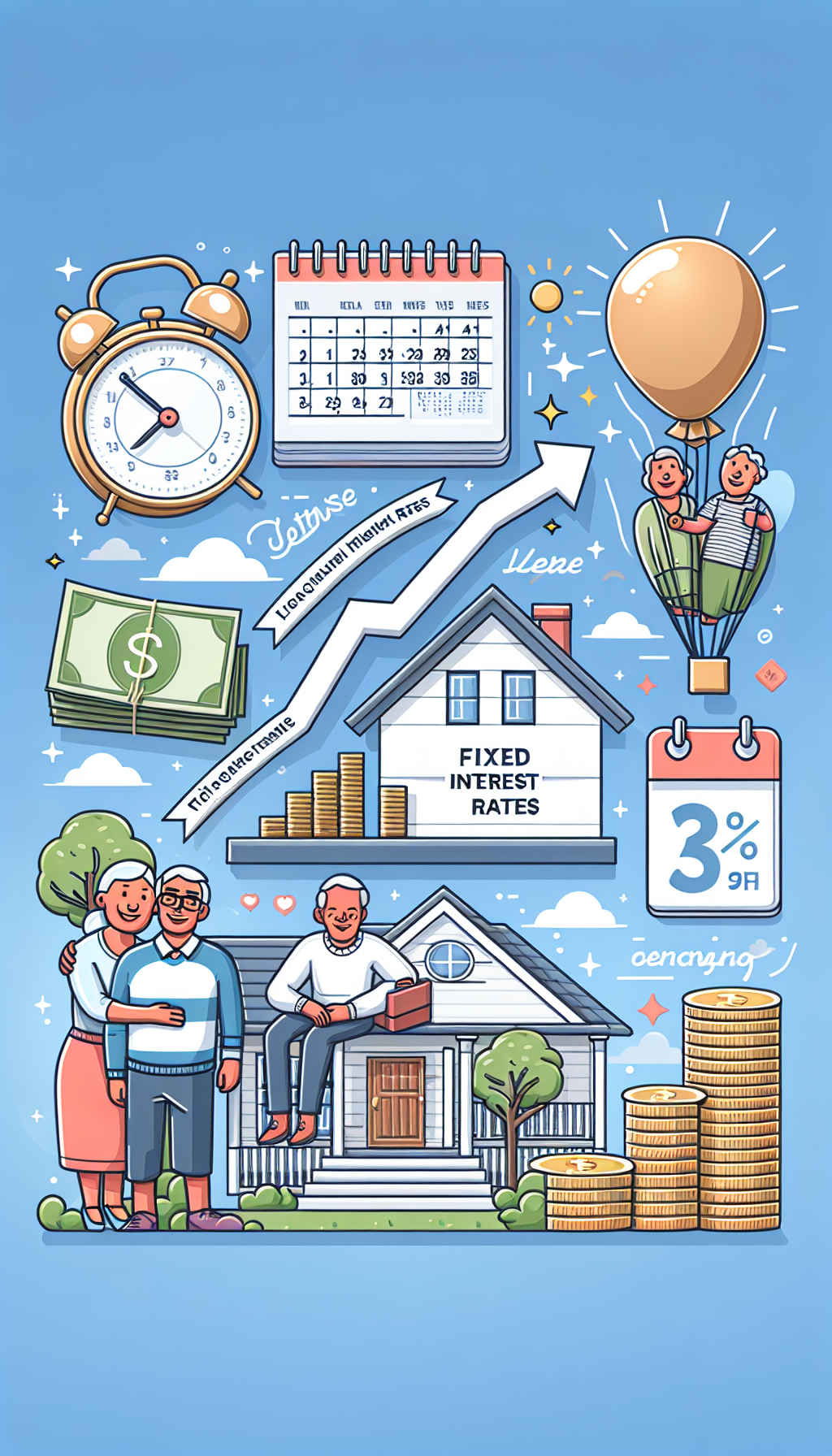
Understanding Reverse Mortgages
A reverse mortgage is a financial product designed for homeowners aged 62 and older, allowing them to convert a portion of their home equity into cash without having to sell their home. This can be particularly beneficial for retirees seeking to supplement their income, cover healthcare expenses, or fund home renovations. Unlike traditional mortgages, in which homeowners make monthly payments to the lender, reverse mortgages enable borrowers to receive payments from the lender, thereby deferring repayment until the homeowner sells the house, moves out, or passes away.
The Appeal of Fixed Interest Rates
One of the key features of reverse mortgages is the choice between fixed and adjustable interest rates. Fixed interest rates, as the name implies, remain consistent throughout the life of the loan, providing borrowers with predictable monthly payments. This stability can be particularly advantageous for seniors on a fixed income, allowing them to budget more effectively without worrying about fluctuating interest rates that could increase their overall repayment costs.
Predictability and Financial Stability
The long-term benefits of fixed interest rates in reverse mortgages primarily revolve around financial predictability and stability. With fixed rates, borrowers know exactly how much interest will accumulate on their loan over time, which can simplify financial planning. This predictability is crucial for retirees, who often have limited income sources and need to ensure their financial resources last throughout their retirement.
Moreover, fixed interest rates protect borrowers from market fluctuations. In an environment where interest rates can rise unexpectedly, having a fixed rate can shield homeowners from increased costs associated with an adjustable-rate mortgage. This peace of mind can lead to a more secure and stress-free retirement.
Long-Term Equity Preservation
Another significant advantage of fixed interest rates in reverse mortgages is the potential for better equity preservation over the long term. With a fixed interest rate, the accumulation of interest is predictable, allowing homeowners to estimate how much equity they may retain in their property as the loan balance grows.
Homeowners who choose a fixed rate will likely see slower growth in their loan balance compared to an adjustable rate, especially if market rates rise significantly. This can be especially beneficial for seniors who wish to leave an inheritance for their heirs, as it provides greater assurance that more equity will remain in the home.
Reduced Risk of Financial Strain
Choosing a fixed interest rate can also reduce the risk of financial strain in later years. For many retirees, unexpected expenses can arise, whether related to health care, home maintenance, or other emergencies. Knowing that their mortgage interest will not increase over time allows borrowers to allocate their finances more effectively and avoid the added stress of rising debt obligations.
In contrast, adjustable rates can lead to increasing loan balances that may become unmanageable, particularly if borrowers do not have a substantial buffer in their financial planning. By opting for a fixed rate, seniors can mitigate the risk of falling into financial hardship due to unpredictable payment increases.
Conclusion: A Strategic Choice for Seniors
In summary, fixed interest rates in reverse mortgages present several long-term benefits that can significantly enhance financial well-being for seniors. With a predictable and stable interest rate, homeowners can enjoy peace of mind, preserve equity, and reduce the risk of financial strain. As the population ages and more individuals seek ways to leverage their home equity in retirement, understanding the advantages of fixed interest rates becomes increasingly vital. For many, this option may serve as a strategic choice that supports a more secure and fulfilling retirement experience.